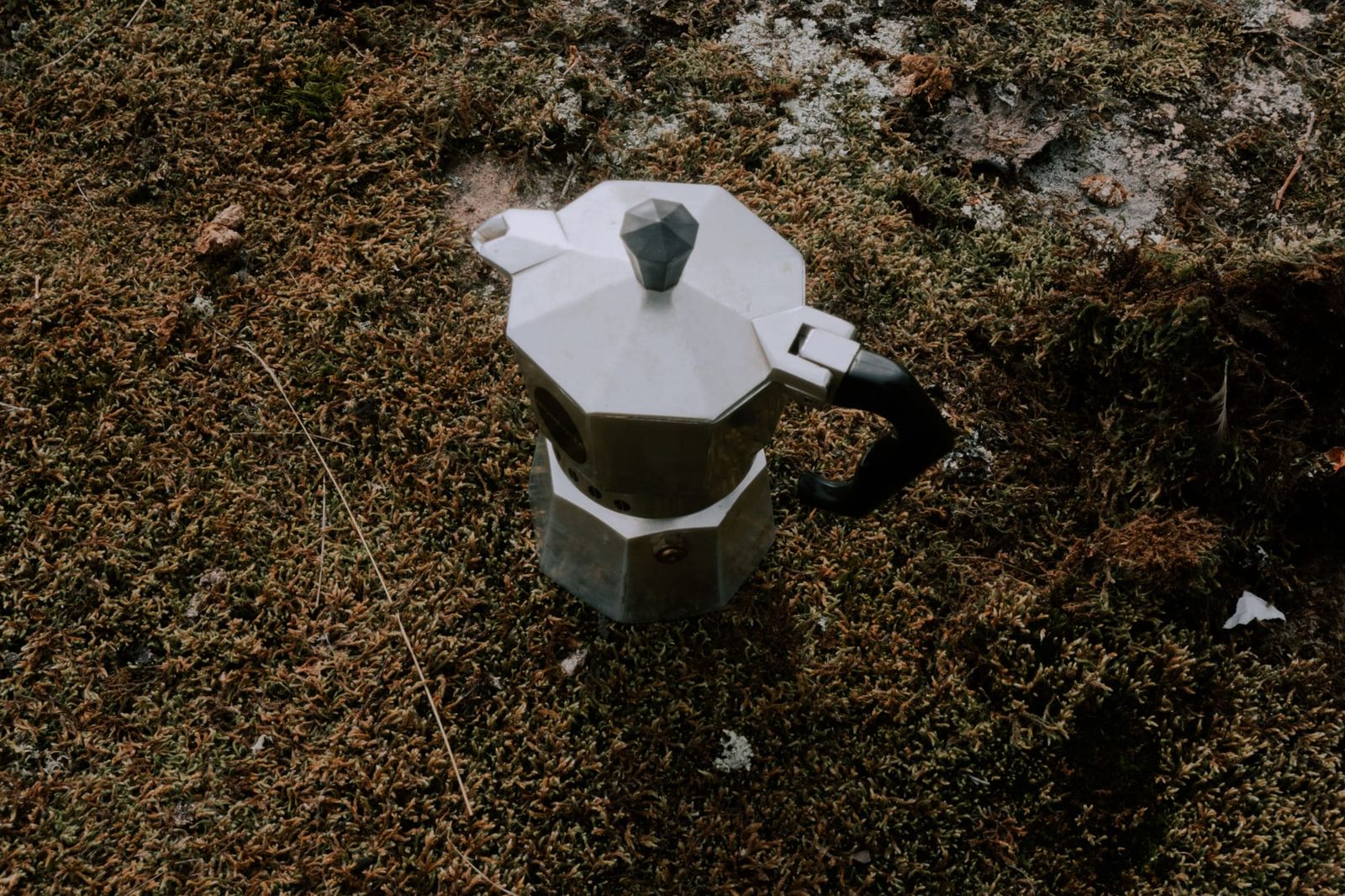
Espresso Shots 1-4-26

"Do Lipton employees take coffee breaks?" — Steven Wright

Espresso Shots 1-4-26
beans, beans and more beans.

It's that time again for my weekly update, which includes a short collection of noteworthy finds, posts that inspire, as well as a few reflections from the past week or two. I'll aim to land these in your inbox by the weekend, in time to pair with your morning coffee (or your preferred cup of inspiration).

The Latest Drippings ☕️

  • Food Is the Great Connector and Laughs Are the Cement. I like the general concept of lensing into the 'small things that make the difference, that build the connective tissue that keeps a team going through the inevitable ups and downs of organizational life.' His point is that you should notice when people are laughing, as it's a sign that they have strong relationships within groups and, more importantly, have each other's backs. I do take issue with calling work 'family' - it's not. It is more like a sports team: a place of contribution, not something that defines identity.
  • The Legacy of Brownie Mary. This week I learned about San Francisco resident Mary Jane Rathbun aka Brownie Mary, who in the 1980s, had 'been donating magic brownies and unadulterated cookies to dying patients and volunteering in the AIDS ward of San Francisco General Hospital.' Funded from her own Social Security checks, she had been repeatedly arrested (and released with community service sentences), but that didn't stop her fight for the legalization of marijuana, and her passion for easing the pain of these patients was legendary. Mary's 'secret recipe' was never revealed, even after her passing in 1999 at the age of 77.
  • Get Rid of Your Boss. Share a Story Instead.. 'Most organizations don’t run on org charts. They run on stories. If you want to replace hierarchy with real self-management, you must first replace the old story with a new one.' Storytelling is one of the most underrated skills teams should be deliberately investing in, as it is often the primary mechanism by which meaning travels inside an organization. And when I say storytelling, it's not about presentation polish, it's about having the ability to explain why a problem matters, who it matters to, what tradeoffs were made in the past, and how to paint a connection to where work is going. Understand the whole arc - the system, not just the goal.
  • The Ultimate Productivity Hack. An interesting post on how to take a personal retreat, and asking yourself three questions: What should I START doing? What should I KEEP doing? What should I STOP doing? It's always good to take time and understand what deserves your attention.
  • Tools and Perspectives to Help Steady Your Routines, Reclaim Your Attention, and Move Deliberately Toward What Matters. Speaking of attention, some great hacks/tweaks on 'bringing order back to your days without reinventing everything.'
  • Who's Counting?. Since it's the start of the year, another post on what to subtract and what to stop counting. Also, an interesting nugget in here on looking at 'books I abandoned this year as a way to understand reading habits.'
  • Idea Protectionism. Great post from 2021 on not squashing new ideas, but rather creating space for them to grow. 'The hard thing is to make room for what may be possible. To help it unfurl. To encourage emergence, to explore, to expand. To be part of the soil that helps something blossom. To wonder what could be before it can be. To simply give something a chance before smashing it to bits.'
  • The Hero's Journey Isn't as Universal as You Think. The hero's journey, as taught in school, often involves a call to adventure, refusal, meeting a mentor, crossing the threshold, facing trials, failing, succeeding, and returning with a reward. An interesting essay on how modern storytelling is moving away from this, with stories such as The Big Lebowski, where 'characters that — although they go on larger-than-life adventures — are unable or unwilling to learn from their experiences.'
  • Let Franchises End. Matt pointed out this video in his excellent post on let stories end, in which he writes, 'my general dissatisfaction with franchises and TV shows is that a key part of storytelling, the ending, isn't really a thing.' It is a big issue with most television and film these days (I don't think we need a Big Lebowski cinematic universe as fascinating as that could be :)). 'We needed stories to end so we could make sense of them.'
  • The Post-American Internet. I found this link via The Enshittifinancial Crisis and, as I've written previously about the excellent post/book Enshittification, felt it was a great one to share. Cory has a brilliant talk/essay (video here) on the opportunities for dis-enshittification this year and digital sovereignty. Well worth your time.
  • The One About Master-Keyed Mechanical Locks. I ran across this via Matt's Mastodon post, and it was a fascinating read on two fronts. First, that master-keyed locks have fundamental, exploitable weaknesses (read the PDF - apparently they have for over a century!), but secondly, the reaction to his paper. 'Then locksmiths freaked out. I mean completely lost it. They were very upset, not so much that a very common lock design had a basic security flaw, but that an outsider found it and had the poor moral character to make it public. I started getting weird death threats.'
  • Russia's Doomsday Radio plays Swan Lake. I just thought this whole post was super interesting, and had to share. 'UVB-76, Russia's mysterious radio, became active again and began playing music from Swan Lake. The radio station, which is also called Russia's Doomsday Radio or The Buzzer, played more tracks, including an old Soviet song but with an allegedly reworked song with altered lyrics to celebrate an attack on the Ukrainian capital Kyiv, according to Russian media.' Why is this interesting? 'Music on Doomsday Radio is rare, and it has reportedly happened only three times in the station’s history. Russian media claims that music was heard in 2024 and in February 2022. Russian commenters have claimed that Swan Lake has played in Russia in the past when "something bad" was about to happen or during a political crisis.' Stay tuned.
  • Print is Forever. Over the last year, I've really been enjoying more and more print-only content: Geezer, Mountain Gazette, The Southwester, N+1, Delayed Gratification, etc., to name a few. I'd love to get a copy of The Secret Playbook, but it's sold out. 'Print, however, moves at a more human speed.' Totally agree with this, and it looks like Robin Sloan is pushing into something interesting thoughts here: 'The value of print is actually not about paper. It's about the set of demands and offerings that that paper has. Privacy, stability, reliability, sovereignty.'
  • Write to Escape Your Default Setting. Why it's important to write: 'Writing provides scaffolding. Structure for the unstructured, undisciplined mind. It’s a practical tool for thinking more effectively. And sometimes, it’s the best way to truly begin to think at all.'
  • Why I Write (And You Should Too!). In the same thread of writing, 'Writing is a muscle. The more you write, the easier it gets, and your ability improves. You’ll learn to make clearer arguments, crisper explanations, and better empathize with your audience. These skills are applicable to everything.'

Amor Fati ✌🏻

Subscribe to Makoism

Sign up now to get access to the library of members-only issues.
Jamie Larson
Subscribe